 BLOG
Life as a New Practitioner
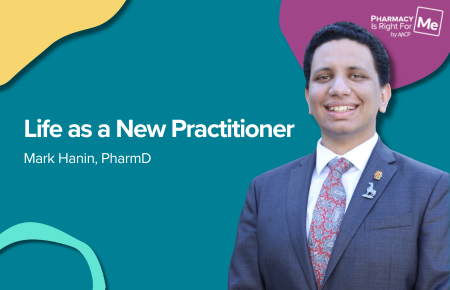
Mark Hanin is a Postgraduate Year One (PGY-1) Pharmacy Resident at the Northern Arizona Veterans Affairs Health Care System (NAVAHCS). He recently graduated from the University of Southern California Alfred E. Mann School of Pharmacy and Pharmaceutical Sciences (USC Mann) with his Doctorate of Pharmacy (Pharm.D.) degree. He graduated as Class President, a nationally and internationally recognized researcher, and was selected to deliver the Student Address on behalf of his peers in the Pharm.D. Program.
I cannot believe it has been almost 6 months since I graduated from the USC Alfred E. Mann School of Pharmacy and Pharmaceutical Sciences. I still remember the details of our Commencement Ceremony like it was yesterday. How the moment felt as our entire class walked across the stage to get hooded and receive our diploma covers. That said, I can look back in awe as I reflect on how fast things have changed since then.
It has been over 3 months since I started my PGY-1 Pharmacy Residency Program at NAVAHCS. My time in the program has been nothing short of fascinating. The experiences I had with many of our nation’s veterans was a reminder to me of the sacrifices they make so that we can enjoy the freedoms we have and hold dear. Throughout these past couple of months, I had the opportunity to work in various longitudinal and rotating learning experiences as part of the program.
My first rotation in the program was with our Home-Based Primary Care (HBPC) team. This was a wonderful opportunity to observe the important role pharmacists have when it comes to providing interdisciplinary care. We got to work alongside physicians, nurses, dieticians, physical and occupational therapists as well as social workers in providing care to veterans unable to frequently travel outside of their homes. Some of the work we did included conducting quarterly medication reviews of our veteran’s medication lists, where we would highlight the changes made over the last quarter and provide recommendations for other members of the healthcare team as needed. Some of these recommendations revolved around highlighting the added negative effects of taking too many medications that block the chemical messenger acetylcholine, of our veteran’s medication list to minimize fall risk and promote safe medication use. In addition, we provided disease state management calls and would take the initiative to conduct educational calls whenever a veteran was prescribed a new medication by their primary care provider.
Outside of our daily responsibilities, we participated in various weekly huddles as part of our main Veterans Affairs (VA) facility in Prescott, Arizona as well as Community Based Outpatient Clinics (CBOCs). These were important opportunities for the team to quickly check-in to see which healthcare professional will be visiting which veteran for the week and troubleshoot any issues to the team. You can say that this was the perfect time to see how the interdisciplinary team comes together to provide care. Not only that, but my time at HBPC allowed me to better understand how pharmacists rely on the work and information provided by the other members of the team so that we can fulfill our mission, which is to provide veteran-centered care to our veterans on a holistic level.
After completing my HBPC rotation, I transitioned to our Patient Aligned Care Team (PACT) 1 rotation. This learning experience involved connecting with our veterans in person, over the phone, or through VA Video Conference (VVC) to provide care. It was a unique opportunity to experience the various modalities pharmacists could use in providing direct patient care, especially when we are providing care in a region as vast as Northern Arizona. We managed various chronic disease states, primarily hypertension, diabetes mellitus and obesity among others. As part of this experience, I worked up patient profiles on a daily basis to prepare for each of our visits that day. The process involved looking at how their last visit went and reviewing any changes that happened since then. These can range from having no changes at all to having the veteran undergo surgery to remove a cancerous tumor and needing to stop their weight loss medication, as an example.
I learned to become detail oriented and a critical thinker as the plan I came up with at the start of the meeting may need to change depending on how the veteran responds. Moreover, I became more confident in leading patient visits independently as I took the time to prepare for each appointment and develop answers to some of the questions I anticipated the veteran coming in with. On a more personal level, I got to directly connect with the veterans and build rapport with them as a way to balance the clinical and social aspect of direct patient care. One of the interesting things about working in the PACT team is that I got to initiate, adjust and discontinue medications on a more frequent basis. This allowed me to directly observe the impact my medical interventions had on my veterans’ health outcomes. My time at PACT has allowed me to become more confident and knowledgeable as a healthcare practitioner.
In tandem with my rotating learning experiences, I get to complete longitudinal ones. These include my longitudinal Anticoagulation Clinic experience, Teaching Certificate Program as well as Residency Research Project among other experiences. As part of the Anticoagulation Clinic, we have the opportunity to address flags or alerts that show up on our system indicating when a veteran may not be on the most preferred blood thinning medication. I became more self-assured in recommending dosage changes or recommending no changes if my findings indicated that the veteran may not tolerate a higher dose. For our Teaching Certificate Program, I became more confident in preparing my own teaching philosophy and applying it to the various deliverables required of me throughout the year. These include patient case presentations, journal clubs among other deliverables. For my Residency Research Project, we are conducting a cost-minimization analysis to calculate the cost savings associated with consolidating Gabapentin capsules into tablets. Gabapentin tablets come in higher doses than capsules, so we are looking at the direct impact this has on our local health system when we reduce the number of pills we dispense. We plan to analyze patient adherence rates next year after making these changes.
Outside of the program, I am taking the time to enjoy my life in Arizona. I attended an Annual Cowboy Gathering, local concerts, community festivities, and a Health and Wellness Expo. I also attempt to visit new locations every weekend and connect with the various business owners and workers to stay true to who I am. On a more "sweet" note, Crumbl Cookies recently had their People's Choice Week from September 13th to 19th. Their new cookie for that week, the Ice Cream Cake Cookie Sandwich, was remarkably similar to the dream flavor I submitted earlier in the summer. The flavor I submitted was “[a] butter cookie sandwich with vanilla frosting, infused with cookie crumbles and rainbow sprinkles around the frosting”. It was so much fun trying to come up with a flavor they did not have, and who knows, I may add Cookie Connoisseur to my skills list! That being said, there is a whole world out there that is waiting to be explored. What you make of it is up to you. You can say that my golden rule is to live a life worth living.